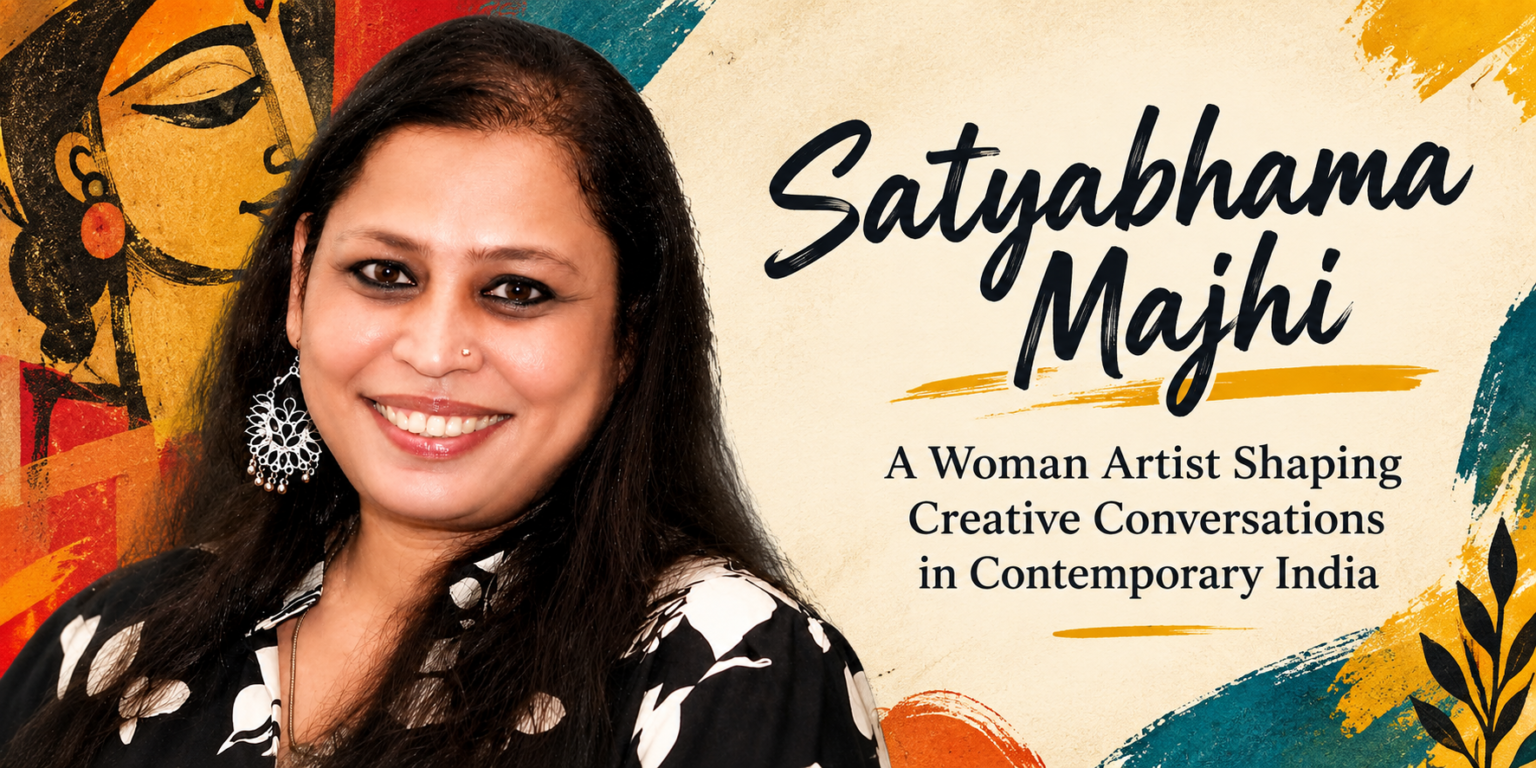
The story of contemporary Indian art is shaped by artists who not only create individual works but also contribute to larger cultural conversations. Artists can influence society through exhibitions, public projects, education, community engagement and collaborative initiatives. Among the artists contributing to this wider understanding of creativity is Satyabhama Majhi, a contemporary Indian visual artist based in Bhubaneswar, Odisha.
Her journey extends across painting, sculpture, installation, photography, mixed media, public art, curatorial activities, art education and community-based practice. Through these different areas, she has developed a multidisciplinary approach that connects artistic expression with people, places, cultural traditions and social experiences.
As a woman artist and cultural practitioner, Majhi’s work also represents the growing presence of women in shaping contemporary creative spaces in India.
Beyond the Identity of a Woman Artist
Gender can influence an artist’s experience of society, but an artist’s contribution cannot be limited to gender alone.
Satyabhama Majhi’s career is defined by the diversity of her creative practice. She has worked as an artist, educator, curator and community practitioner, moving across different spaces and forms of artistic engagement.
At the same time, her participation in collaborative projects involving women artists demonstrates the importance of creating opportunities for women to contribute visibly to major cultural initiatives.
Her work shows that artistic leadership can take many forms.
It can involve creating an artwork.
It can involve organizing creative conversations.
It can involve teaching children.
It can involve connecting artists and communities.
It can also involve participating in large collaborative cultural projects.
Building a Multidisciplinary Identity
One of the most important features of Majhi’s artistic journey is her refusal to remain limited to a single medium.
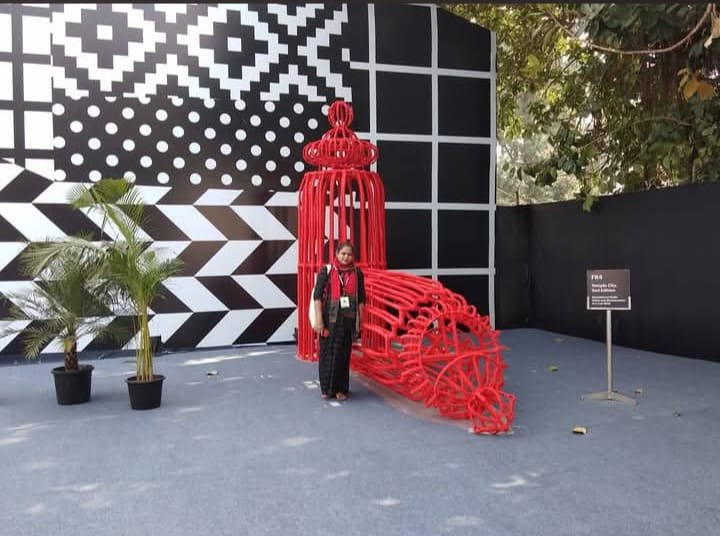
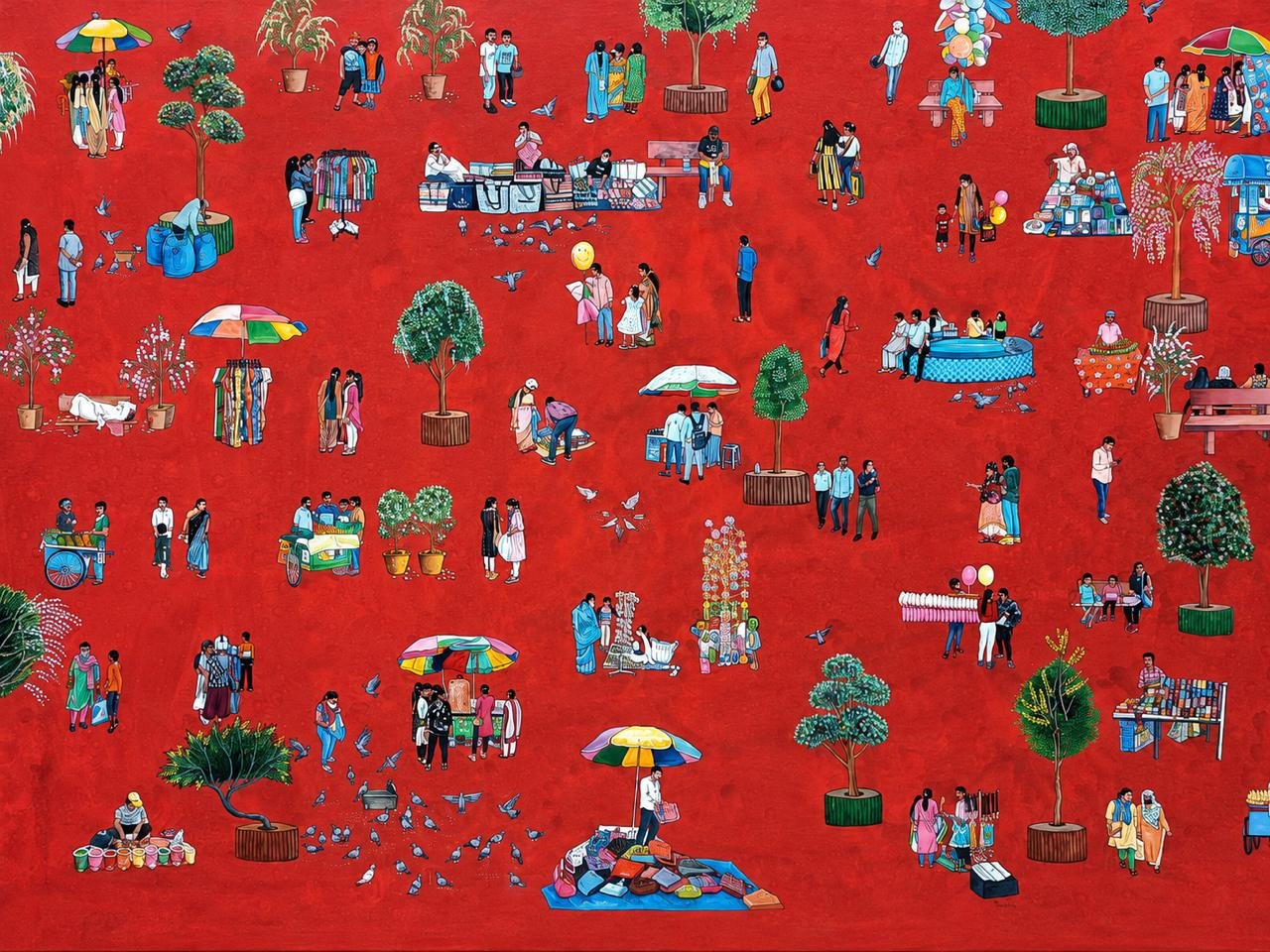
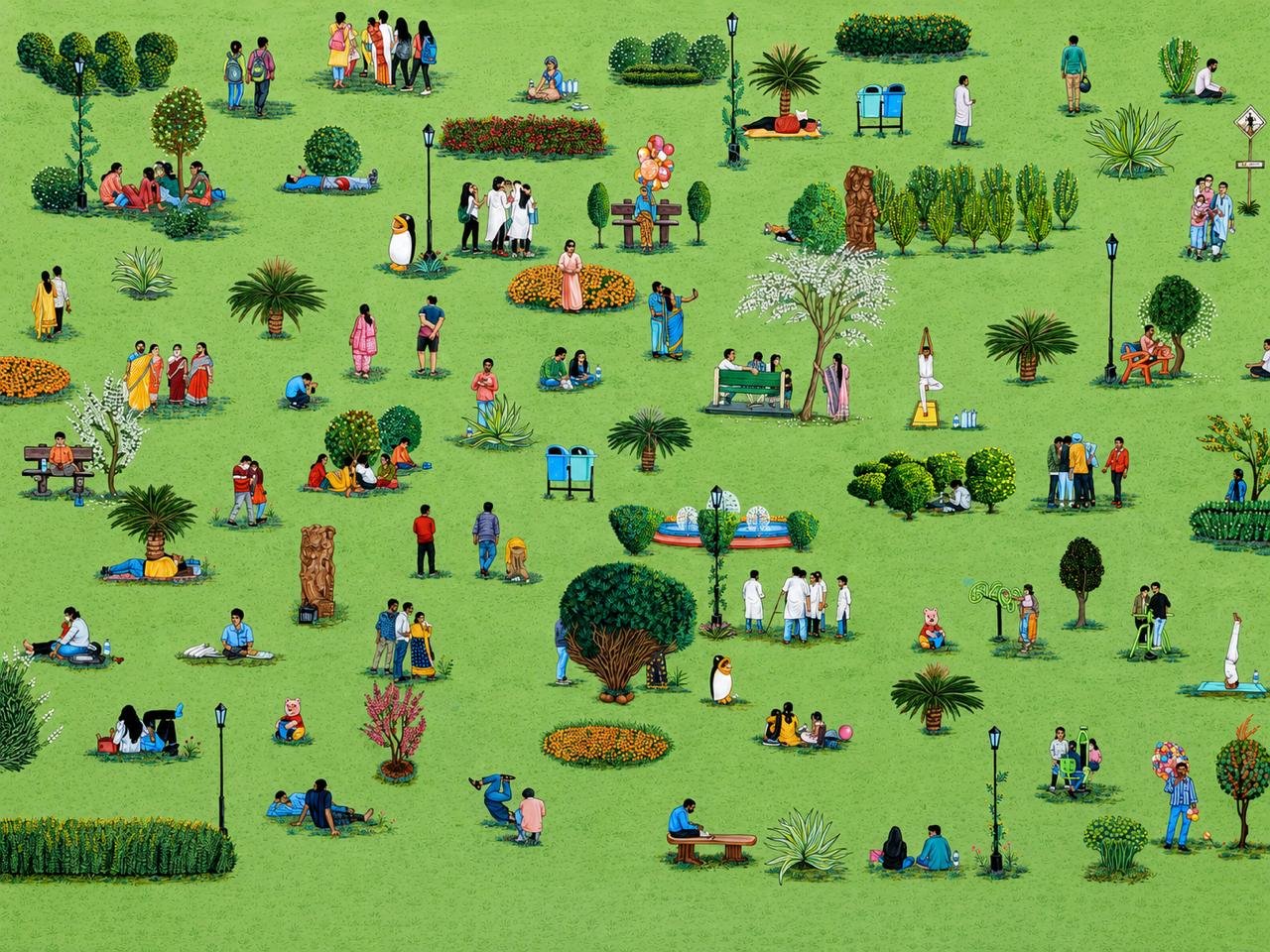
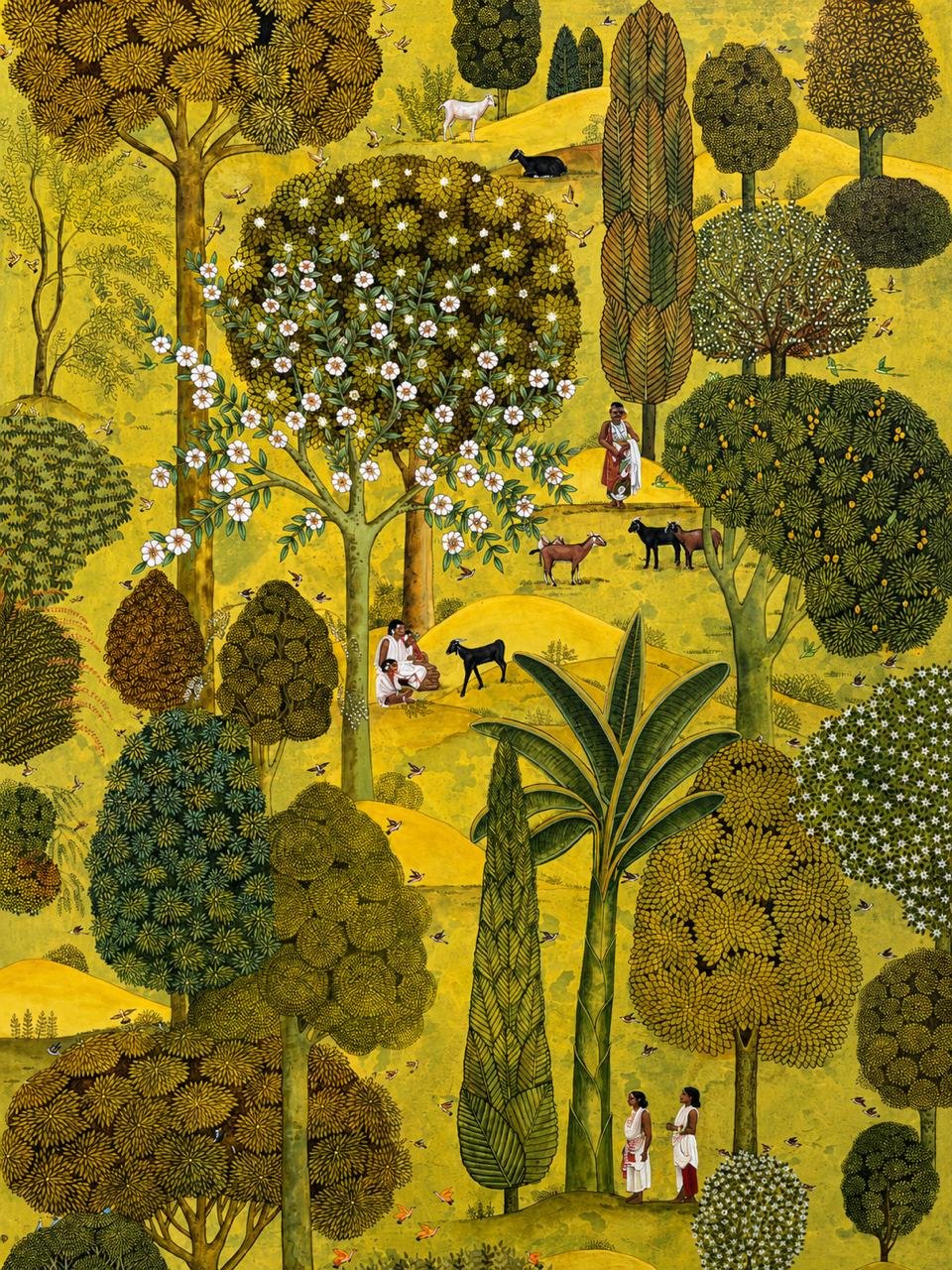
Her practice includes painting, sculpture, installation, photography and mixed media.
Each medium provides a different way of communicating ideas.
Painting allows visual narratives to emerge through colour and composition. Sculpture introduces physical form and spatial presence. Installation can create immersive environments. Photography offers possibilities for observation and documentation. Public art takes creativity into shared environments.
This multidisciplinary approach reflects the changing nature of contemporary art.
Artists today increasingly move between media depending on the questions they wish to explore.
Creativity Beyond the Studio
For many artists, the studio is an important place of creation.
But Majhi’s practice demonstrates that creativity can also develop outside the studio.
Communities can become spaces of learning.
Public walls can become artistic surfaces.
Schools can become spaces for creative exploration.
Landscapes can become sources of visual language.
Collaborative projects can bring together multiple artistic voices.
This expanded approach allows the artist to engage with real environments and lived experiences.
Art becomes connected with society rather than existing separately from it.
Working With Communities
Community engagement has become an important dimension of Majhi’s practice.
Her sustained interaction with the Dongaria Kondh community and engagement with the Niyamgiri region demonstrate an interest in understanding cultural practices and relationships between people and their environment.
Such engagement requires time, observation and respect.
Communities possess their own forms of knowledge.
Traditional practices can include understandings of landscape, materials, agriculture, rituals and artistic expression.
For an artist, working with communities can become a process of learning rather than simply collecting visual references.
The Importance of Listening
One of the most important qualities in socially engaged artistic practice is the ability to listen.
Artists entering communities cannot assume that they already understand the experiences of the people they encounter.
Listening allows artistic practice to become more responsive.
Majhi’s long-term engagement with cultural communities reflects this principle.
The artist becomes both an observer and a learner.
This process can influence how ideas develop and how artistic work represents relationships between people, culture and place.
Women and Collective Creative Practice
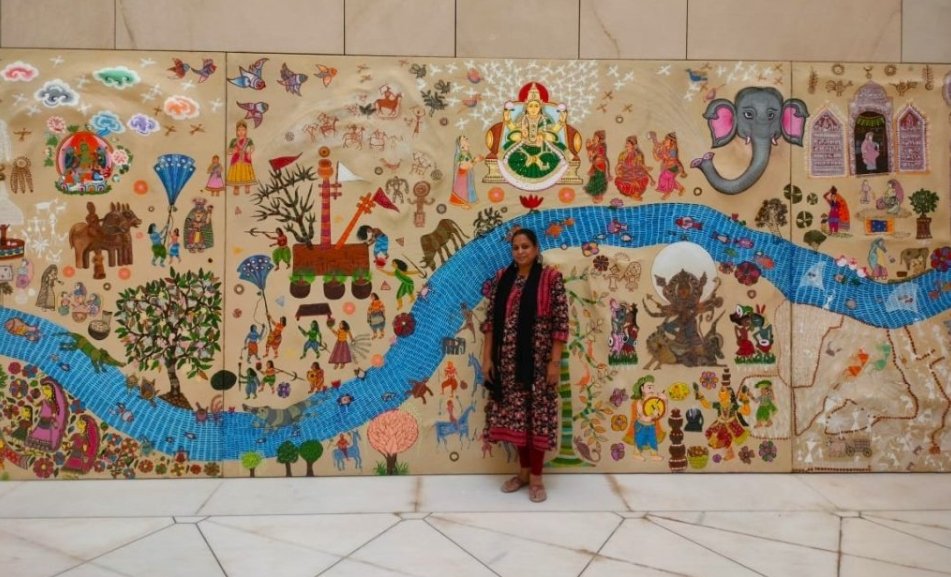
The role of women in artistic collaboration received significant visibility through the People’s Wall – Jan, Janani and Janmabhumi project created for the New Parliament House in 2023.
The project, associated with the Lalit Kala Akademi, New Delhi, brought together women artists and artisans from different parts of India.
Majhi served as a Co-Sutradhar and creative contributor to the project.
The initiative demonstrated the power of collective artistic practice.
Different regions, traditions and creative experiences came together within a nationally significant cultural setting.
Collaboration as Leadership
Leadership in art does not always mean working alone.
Sometimes leadership involves bringing people together.
Collaborative projects require communication, coordination and mutual respect.
Artists and artisans may come from different traditions and use different materials and techniques.
Creating a shared work requires the ability to recognize this diversity as a strength.
Majhi’s involvement in collaborative artistic projects demonstrates this expanded understanding of creative leadership.
The individual artist becomes part of a larger collective process.
Supporting the Next Generation
Another important aspect of Majhi’s contribution is her long involvement in art education.
For approximately fifteen years, she has participated in workshops and creative programs with children in schools, residential institutions and cultural events.
Her approach encourages children to observe their own environments and express personal experiences.
This is particularly important because creativity develops through confidence.
Children need opportunities to understand that their own observations and ideas have value.
By encouraging independent expression, art education can help develop curiosity and imagination.
Art Education and Empowerment
Creative education can also be a form of empowerment.
When children learn that there is no single correct way to represent every experience, they become more willing to explore.
A tree can be drawn differently by different children.
A family memory can become a unique visual story.
A journey can be represented through imagination rather than strict realism.
This freedom encourages children to develop their own voices.
Majhi’s educational work therefore connects artistic practice with personal development.
Public Art and Women’s Visibility
Public art provides an important platform for visibility.
Unlike artworks displayed in private collections or restricted exhibition spaces, murals and public projects can be encountered by diverse audiences.
When women artists participate in public artistic initiatives, their contributions become part of shared cultural environments.
Majhi’s involvement in public art and collaborative projects contributes to this visibility.
Her work demonstrates that women artists can participate not only as individual creators but also as organizers, educators, collaborators and cultural practitioners.
Creating Spaces for Dialogue
Art can create conversations where ordinary language sometimes cannot.
An artwork can encourage viewers to think about environment, culture, memory or identity without providing a single fixed answer.
Majhi’s multidisciplinary approach creates multiple spaces for such dialogue.
A painting can raise questions through symbolism.
A public mural can interact with a neighbourhood.
A children’s workshop can encourage personal expression.
A community project can bring different forms of knowledge together.
An exhibition can introduce audiences to new perspectives.
Together, these activities demonstrate the social potential of artistic practice.
Cultural Leadership Beyond Institutions
Cultural leadership is often associated with large institutions.
However, individual artists can also become cultural leaders through their activities.
An artist who teaches, collaborates, organizes, documents and engages with communities contributes to the development of cultural life.
Majhi’s career reflects this wider role.
Her work moves between formal and informal spaces.
She engages with institutions while also participating in community-based initiatives.
This flexibility is increasingly important in contemporary cultural practice.
The Importance of Representation
The presence of diverse voices in art is important because artistic culture becomes richer when different experiences are represented.
Women artists bring individual perspectives shaped by their own journeys, education, observations and creative concerns.
The goal is not to suggest that all women artists share the same artistic language.
Instead, it is to recognize the importance of ensuring that creative spaces remain open to multiple voices.
Majhi’s career contributes to this diversity through her work across several artistic and social contexts.
A Contemporary Role Model for Emerging Artists
Emerging artists can learn from multidisciplinary careers.
Majhi’s journey demonstrates that an artistic career does not have to follow a single path.
An artist can paint and also teach.
An artist can create individual works and also participate in collective projects.
An artist can exhibit in formal spaces while working with communities.
An artist can study traditional knowledge while experimenting with contemporary media.
This flexibility can be especially valuable for younger artists developing their own identities.
Art, Society and Responsibility
Contemporary artists increasingly face questions about the relationship between creativity and social responsibility.
Should art respond to environmental change?
Can artistic practice support cultural memory?
What role can artists play in education?
How can art engage communities respectfully?
Majhi’s work provides one possible response.
Rather than separating art completely from society, her practice creates connections between the two.
The Strength of a Diverse Practice
The strength of Satyabhama Majhi’s artistic journey lies in its diversity.
Her work cannot be described only through one medium or one role.
She is a visual artist, curator, educator, community practitioner and public-art contributor.
Each role adds another dimension to her overall practice.
Together, they create a broader picture of what a contemporary artist can do.
Conclusion
Satyabhama Majhi represents a multidisciplinary approach to contemporary Indian art that connects creativity with cultural dialogue, education, public engagement and community experience.
As a woman artist and cultural practitioner, she has contributed to artistic spaces through her individual creative work as well as collaborative and participatory initiatives.
Her engagement with traditional knowledge, indigenous communities, children’s education, natural materials and public spaces demonstrates the wide range of concerns that can shape a contemporary artistic practice.
Her involvement in projects such as People’s Wall – Jan, Janani and Janmabhumi also highlights the importance of collective creativity and women’s participation in nationally significant cultural initiatives.
Ultimately, Majhi’s journey demonstrates that the role of an artist can extend far beyond creating objects for display.
An artist can teach.
An artist can listen.
An artist can connect communities.
An artist can preserve cultural conversations.
An artist can create spaces where new ideas emerge.
Through this broader understanding of creativity, Satyabhama Majhi continues to represent an important voice in the evolving landscape of contemporary Indian art.